

 English
 Español
Choosing between a high-back and a mid-back leather executive chair is more than a matter of style. It affects how your spine is supported through long working hours, how much freedom your shoulders and neck have to move, and how well the chair fits the physical layout of your office. This guide compares the two silhouettes on ergonomic support and office layout compatibility, so you can decide which model belongs in your workspace.
Understanding High-Back and Mid-Back Leather Executive Chairs
A high-back leather executive chair has a backrest that extends above the shoulder line and often reaches the neck or head area. It is designed to support the entire spine, including the cervical region, and is commonly associated with senior management positions. A mid-back leather executive chair stops around the middle of the back, providing firm support for the lumbar and thoracic areas while leaving the neck and head completely free.
These two profiles belong to a broader family of office seating. Choosing between them depends on how you work, how long you sit, and where the chair will be placed. Our overview of types of office chairs explains how executive models compare with task chairs, conference seats, and ergonomic mesh options.
Both styles use leather upholstery to create a polished and professional look. The key is to match the backrest height to the demands of your daily tasks and the visual scale of the room.
Ergonomic Support: Where High-Back and Mid-Back Chairs Differ
Ergonomic support is the first thing to evaluate. A chair that does not follow the natural curve of your spine will cause fatigue, no matter how premium the leather feels. The differences between high-back and mid-back models appear in three areas: head and neck support, lumbar and thoracic support, and overall pressure distribution.
Head and Neck Support
The most obvious difference is at the top of the backrest. A high-back chair provides a contact surface for the neck and head, which is valuable when you recline to read a document, take a phone call, or simply rest your eyes. The tall backrest keeps the cervical spine in a neutral position during these moments. A mid-back chair offers no head contact, which is perfectly acceptable in task-oriented work where you lean forward and move frequently rather than reclining for long periods. If neck fatigue is part of your daily routine, the extra height of a high-back model is worth the floor space it occupies.
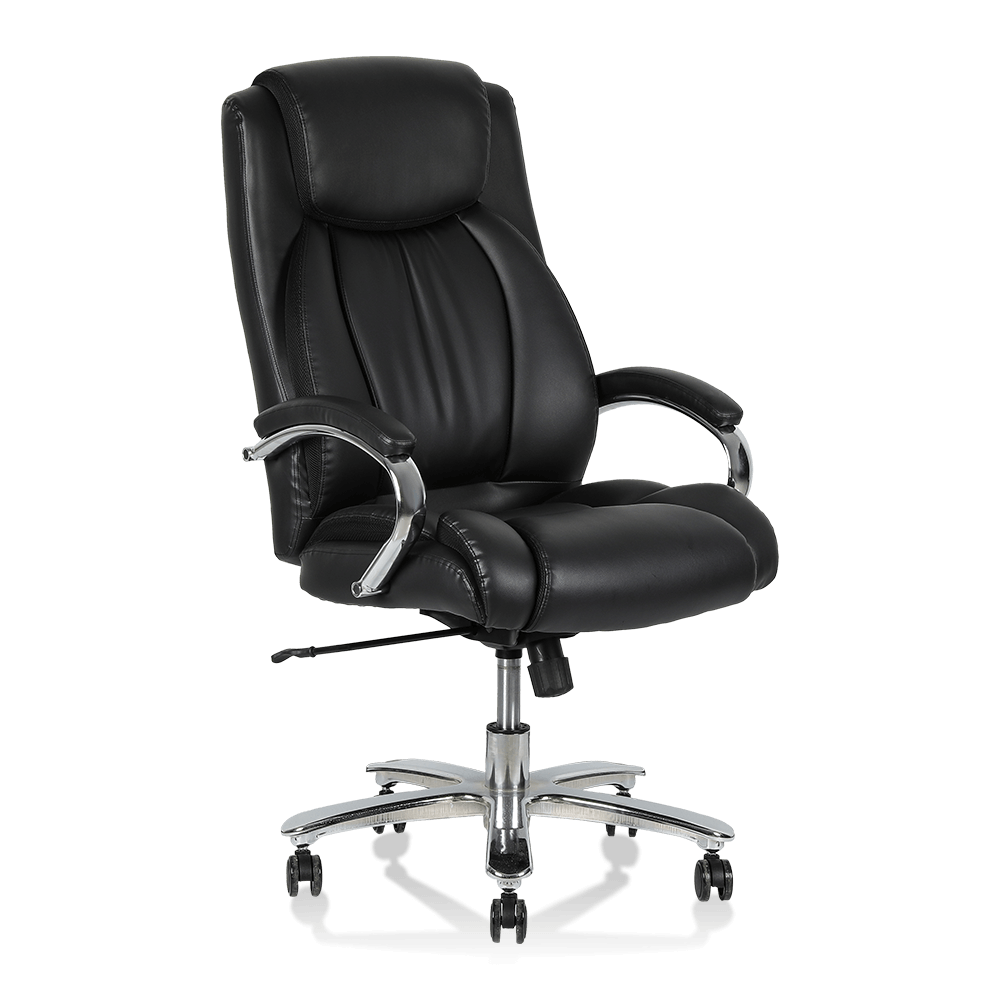 Heavy Duty High-Back Executive Leather Office Chair with 400 lb CapacityThis high-back executive chair offers firm lumbar support and head contact for reclining, making it a strong choice if neck fatigue or extended seated comfort is a daily concern.View Product →
Lumbar and Thoracic Support
Mid-back leather executive chairs concentrate their support on the inward curve of the lower back. Because the backrest is shorter, the lumbar contact is direct and firm, which many users find ideal for maintaining an upright posture at a desk. High-back chairs distribute support over a much larger area of the torso. This reduces pressure on any single zone and makes the chair feel comfortable over extended periods, especially for taller users whose upper back benefits from additional contact.
Pressure Distribution and Movement
When you sit for six or more hours, pressure builds in the intervertebral discs and soft tissue. A high-back chair spreads that pressure across the full back, which is helpful when you want to relax and shift position. A mid-back chair keeps the thoracic and shoulder areas free, allowing easier rotation and reaching. People who work between multiple screens, swivel frequently, or turn to speak with a colleague will appreciate the openness of a mid-back design.
Office Layout Compatibility
Ergonomics is only half of the decision. A chair that is perfect for your spine can still feel wrong if it dominates a small room or disappears in a large one. Visual presence, sightline management, and floor space are all part of layout compatibility.
High-Back Chairs for Private Offices and Executive Suites
Private offices usually have enough space to accommodate a tall backrest. A high-back leather executive chair anchors the room, signals authority, and pairs naturally with a large desk and credenza. When the office door is open, the tall silhouette also provides a degree of visual privacy by partially screening the user from the corridor. In a layout that includes a small meeting table or lounge corner, the high-back chair becomes a visual focal point.
Mid-Back Chairs for Open-Plan and Collaborative Zones
Open-plan offices reward compact solutions. A mid-back leather executive chair keeps the premium leather finish and ergonomic features while taking up less physical and visual space. In a row of workstations, the shorter backrest prevents sightline interference and keeps the room feeling larger. Mid-back models are also easier to tuck under a desk, which matters in narrow aisles and benching configurations.
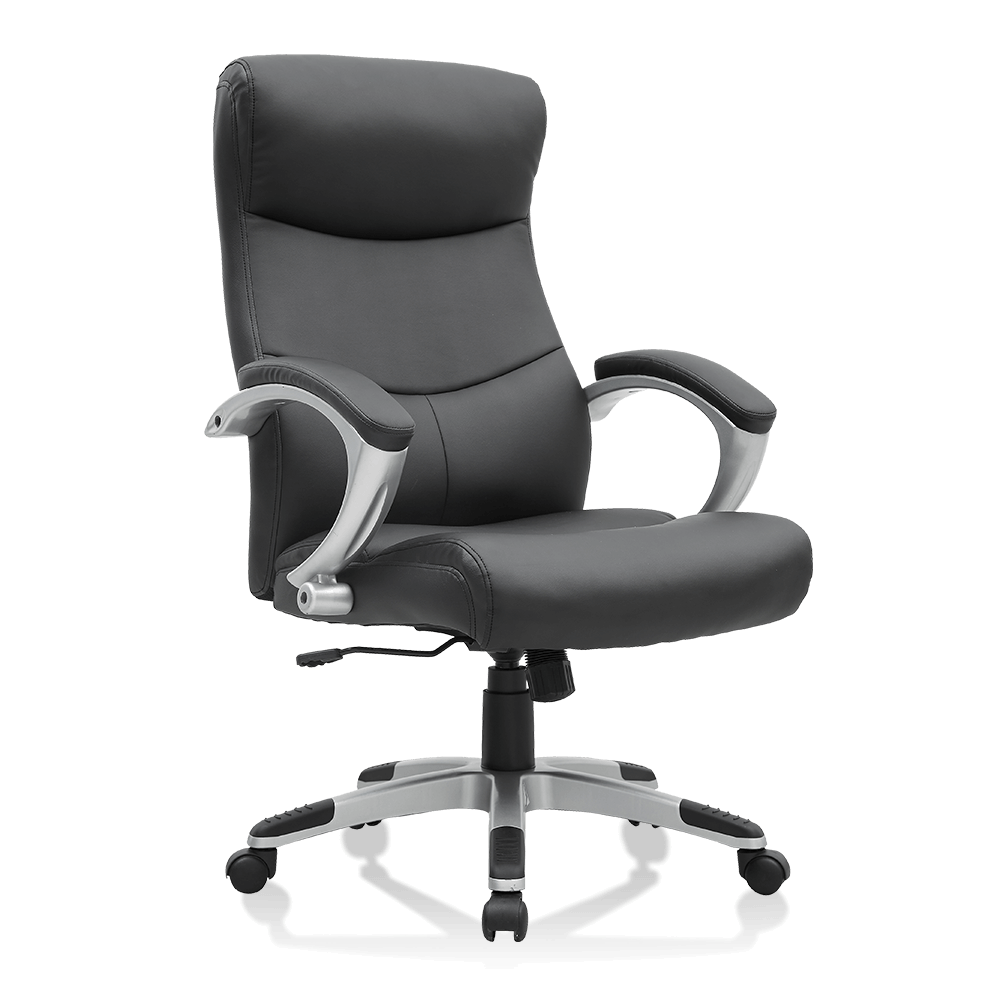 Modern Mid-Back Managerial Office Chair with Soft Foam PaddingThis mid-back manager chair combines a compact backrest with comfortable foam and quiet casters, suiting open-plan desks where sightlines and floor space matter.View Product →
Conference Rooms and Mixed Layouts
Conference rooms need a balanced seating scheme. Mid-back chairs around the table keep sightlines open during presentations and make the room feel more spacious. A single high-back chair at the head of the table can define the leadership position without turning the space into a wall of tall backs. Many facilities use this mixed approach to support hierarchy, sightlines, and cleaning access at the same time.
Side-by-Side Comparison
The table below summarizes the most important differences for ergonomic support and layout planning.
| Feature | High-Back Leather Executive Chair | Mid-Back Leather Executive Chair |
|---|---|---|
| Backrest height | Above shoulders, reaches neck area | Ends at mid or upper back |
| Neck and head support | Built into the backrest | None; head stays free |
| Lumbar support | Distributed over the full torso | Focused on lower back |
| Shoulder freedom | Limited by the tall backrest | Full range for reaching |
| Reclining comfort | Excellent for rest and reading | Good for active task work |
| Visual presence | Strong and authoritative | Compact and understated |
| Best office layout | Private office, executive suite | Open plan, conference, cubicle |
How to Choose the Right Leather Executive Chair
Start with your body, then measure the room. If you feel neck tension at the end of the day and like to recline while thinking, a high-back leather executive chair gives you support that a shorter backrest cannot provide. If most of your work happens at the keyboard, with constant reaching and turning, a mid-back model delivers focused lumbar support while keeping your shoulders free. Tall users generally feel more supported in a high-back chair, while average-height users often find the shorter backrest correctly aligned with their thoracic curve.
Measure the distance between your desk and the wall behind your chair, and add generous clearance for the recline motion. Check the sightline from the entrance: if the backrest blocks a window, a notice board, or a door swing, the chair will feel intrusive no matter how comfortable it is.
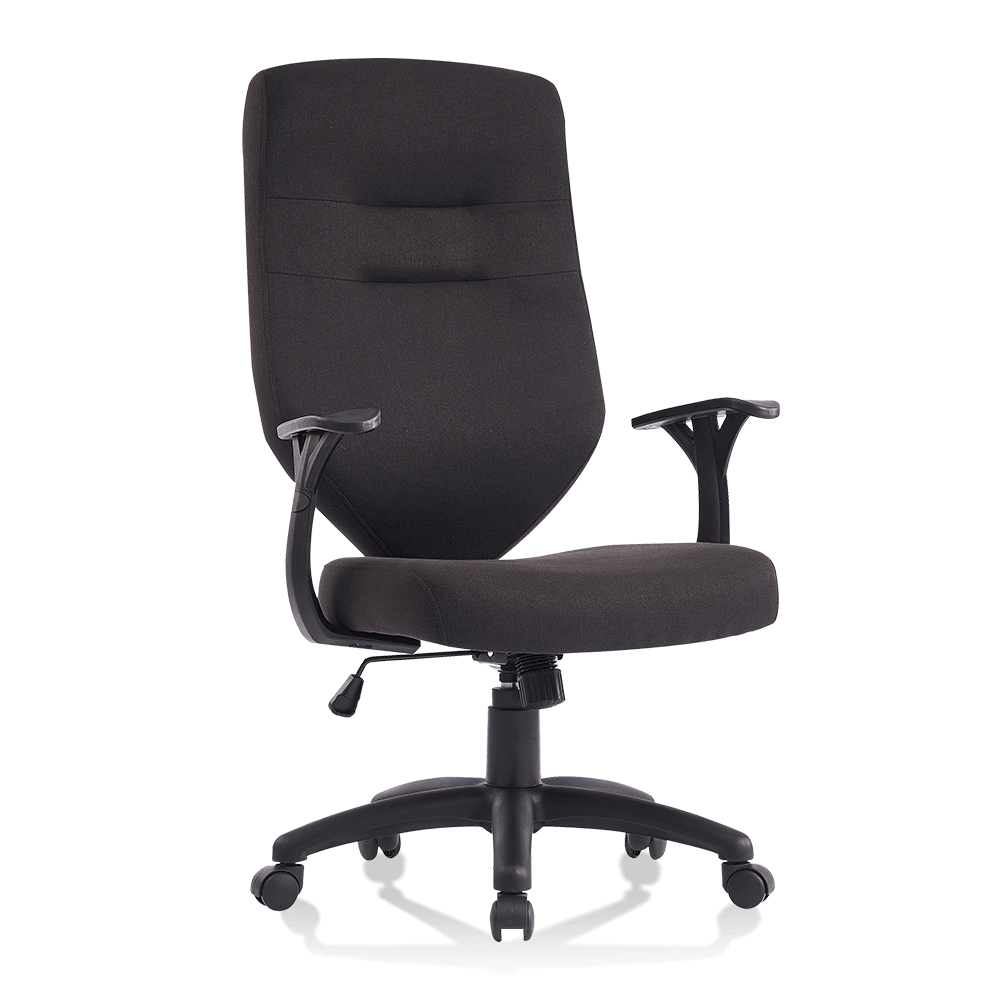 Breathable Leather Ergonomic Executive Desk Chair with Elegant DesignThis ergonomic leather chair blends visual appeal with lasting comfort and durability, ideal for a private office where the taller leather back adds a sense of luxury.View Product →
Leather upholstery also influences the decision. For a chair used by visitors as well as the primary user, a mid-back model with an easy-to-clean backrest is practical. In a chair that stays in one office, the taller leather surface of a high-back model adds to the sense of luxury and continuity with the room finish.
When you are ready to order, contact Xuanlong Furniture to request specifications, samples, and customization. For buyers who need specific dimensions, colors, or branding, we offer customized manufacturing services that adapt executive chair designs to your project requirements.
Frequently Asked Questions
Q1: What is the main ergonomic advantage of a high-back leather executive chair?
The main advantage is neck and upper back support. The tall backrest keeps the cervical spine aligned when you recline and reduces strain on the shoulders during rest periods. This is especially useful for people who spend more than six hours seated and take short breaks without leaving the chair.
Q2: Is a mid-back leather executive chair better for posture?
Not necessarily better, but more focused. A mid-back chair supports the lumbar and thoracic regions, which encourages an upright position during active work. Users who prefer firm and direct pressure on the lower back often find mid-back models more comfortable than high-back chairs with their broader support surface.
Q3: Can a high-back chair fit in a small office?
Yes, if the room has enough depth for the backrest to recline. High-back chairs are noticeably taller than mid-back models, so measure from the back wall to the desk edge and add clearance for the recline motion. Also check the door width if the chair is moved between rooms.
Q4: Which chair is better for a conference room?
Mid-back chairs are usually the safer choice for conference rooms because they keep sightlines open and make the room feel more spacious. If the table has a clear head position, a single high-back chair can add authority without upsetting the visual balance of the space.
Both high-back and mid-back leather executive chairs can serve an office well. The right model is the one that supports your spine, suits your working style, and fits the room around you. Prioritize comfort, verify the dimensions, and choose a chair that reflects the level of authority and openness you want your workspace to communicate.