


 English
 Español
Built-in massage mechanisms have moved from a novelty to a mainstream feature in gaming chairs. They add comfort and perceived value, but they also add hardware to a structure that is already responsible for holding a seated user through long sessions. For importers, distributors, and private-label buyers, the important issue is how that hardware affects the chair’s internal frame stability and weight capacity. This article examines the engineering trade-offs and what a reliable factory should do to manage them.
What Built-in Massage Mechanisms Add to a Gaming Chair
Massage systems in gaming chairs generally fall into two categories: vibration-pad systems and rolling-massage systems. Vibration pads use flat motors embedded in the seat cushion or backrest, while rolling systems use moving nodes that travel along guide rails. Both need brackets, control boards, wiring, and often a hand remote or integrated control panel. Once installed, these components add two to six kilograms to the chair, depending on the number of motors and the size of the mechanism.
That extra weight changes the load path. The frame must support not only the user’s body weight but also the mass of the massage module, and it must do so without adding noticeable flex. The mounting points become stress concentration areas, and any weakness in the seat pan or backrest welding can turn into a long-term problem. Manufacturers who treat massage as an afterthought usually bolt a standard motor pack onto an existing frame and ignore the structural consequences. A better approach is to design the frame specifically for the massage hardware.
For example, the XL66653 multifunction chassis massage gaming chair from our factory is built with a reinforced chassis layout that distributes the mechanism’s weight across a wider area. Instead of relying on a single bracket, the frame uses integrated cross braces under the seat pan to reduce twisting. It is a small detail, but it makes a measurable difference in how stable the chair feels during operation.
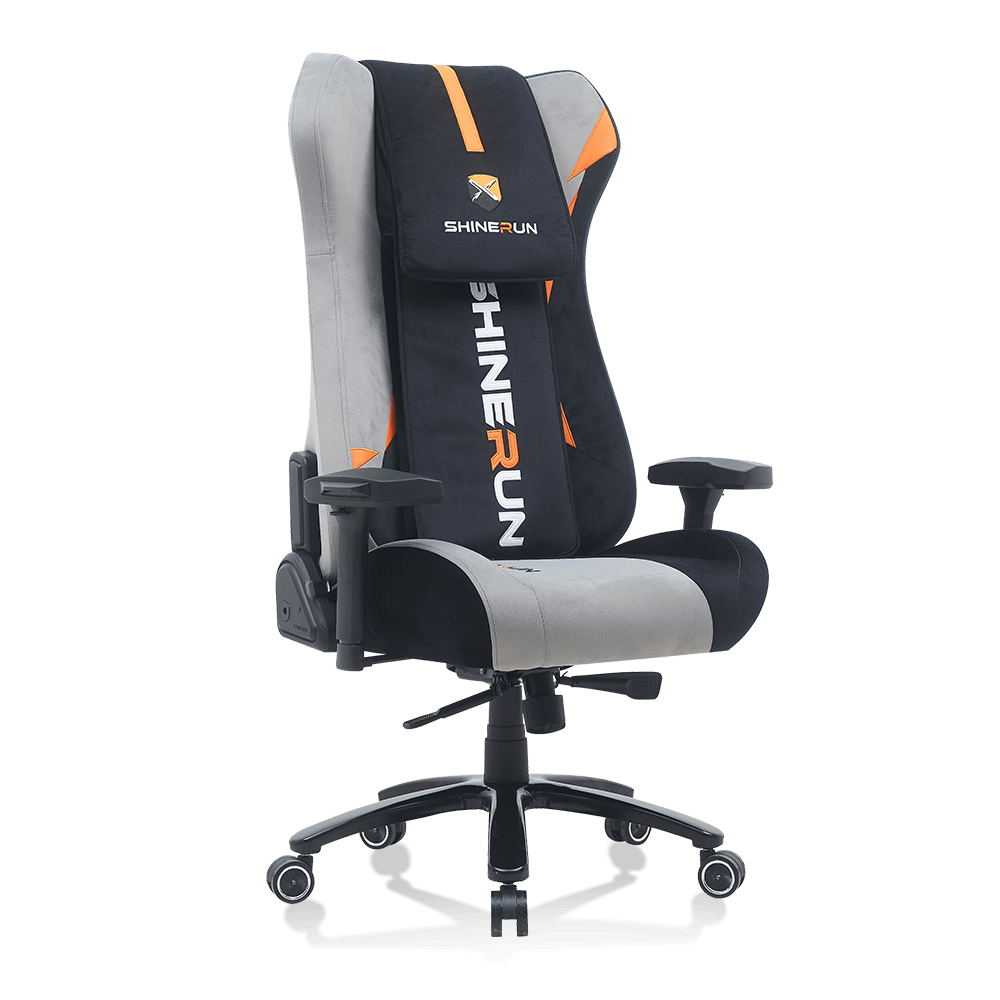 Reinforced Chassis Massage Gaming Chair with 3D ArmrestThis factory-built massage gaming chair features a reinforced chassis with cross braces under the seat pan, helping maintain stability during massage oscillations. Molded foam, PVC leather, and a 350mm metal base support long gaming sessions.View Product →
Internal Frame Stability: Where the Extra Load Lands
Frame stability refers to the ability of the chair to resist deformation under static and dynamic forces. A massage mechanism does not sit still. When the massager runs, it creates small but continuous oscillations. Those oscillations are transferred to the seat plate, the backrest frame, and eventually to the gas lift and base. If the frame is too light or has poorly placed welds, the chair may develop a permanent tilt or squeak over time.
An internally stable massage gaming chair keeps the user’s weight aligned with the center column and prevents the backrest from twisting when the massage unit is running.
The center of gravity also shifts. Massage motors located in the backrest move the balance point backward. If the chair already has a narrow five-star base, that rearward shift can increase the risk of tipping when the user leans back. This is why massage chair frames often need larger diameter bases and stronger tilt mechanisms. Our engineering team usually widens the support circle by using a bigger base and heavier gauge steel for the backrest stays.
Weight Capacity: Static Load vs. Dynamic Load
Weight capacity is one of the most visible specifications on a gaming chair, but it is often misunderstood. Static weight capacity is only part of the picture. A massage mechanism introduces dynamic forces that multiply stress at joints and fasteners. A frame that passes a static 150 kg test may still develop cracks under constant low-level vibration if the mounting points are poorly designed.
| Load Type | Effect on Frame | What Should Be Checked |
|---|---|---|
| Static seated load | Bending stress on seat pan and backrest | Rated user weight plus mechanism weight |
| Dynamic impact | Repeated stress from sitting down | Endurance cycles at defined weights |
| Vibration / massage load | Oscillating forces around mounting points | Extra cycle tests with massage switched on |
| Reclining / backrest torque | Torsion on tilt mechanisms | Combined with massage load when motor is in backrest |
Frame design, tube thickness, and weld quality all determine whether the chair can handle this combined load. In a massage chair, the weight capacity should be stated as the combined weight of the user plus the massage system, not just the user alone. Buyers should ask for this number explicitly when comparing products.
Another factor is cable routing. In models with a hidden remote control, the wiring must pass through the frame or cushion without cutting large holes in load-bearing members. The XL66658 hidden remote control massage gaming chair is an example where the cable channels are molded into the side panels, so the structural integrity of the frame remains intact.
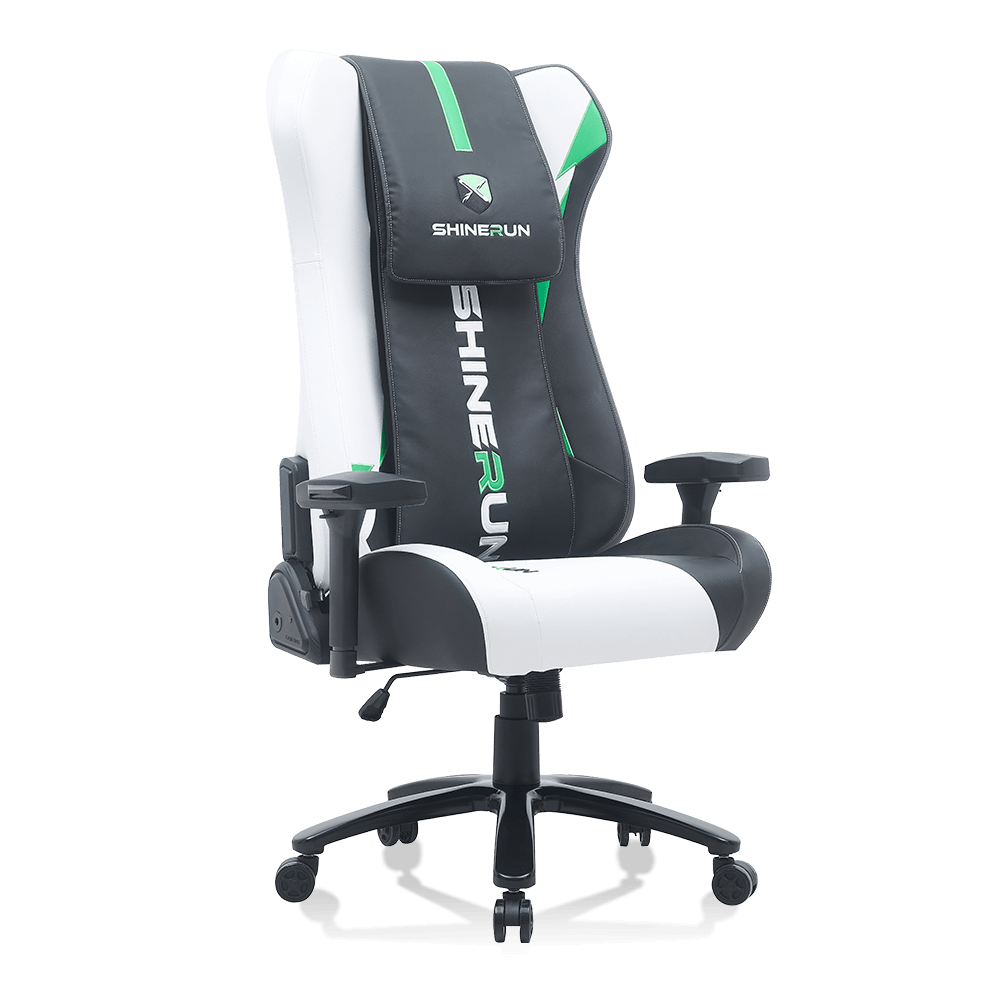 Massage Gaming Chair with Hidden Remote and Cable RoutingDesigned to preserve frame integrity, this massage chair routes cables through molded side panels instead of cutting into load-bearing steel. Includes 3D armrests with a drawer for the remote, molded foam, and metal base with PU casters.View Product →
Frame Materials and Structural Reinforcements
Steel remains the default material for gaming chair frames, but not all steel is equal. The wall thickness of the tubing, the shape of the cross-section, and the location of reinforcement plates all matter. For massage models, a minimum tube wall thickness of 1.5 mm is common, and high-load areas often use 2.0 mm steel or additional gusset plates at welded corners.
Cross braces are another key element. A simple U-shaped seat pan can flex when a massage unit vibrates. Adding a lateral brace underneath the seat pan and a backplate behind the lumbar area greatly increases torsional stiffness. The base also needs an appropriate size: a massage chair with a 350 mm aluminum base feels more planted than one with a narrow 280 mm nylon base.
For buyers with custom specifications, the best way to ensure correct material selection is to work with engineers who can calculate the forces. Our custom design and engineering support can adapt frame geometry, tube thickness, and brace locations to meet specific weight capacity targets. This is especially important for private-label projects where imported brands need a consistent rating across different markets.
Manufacturing and Quality Control That Preserve Durability
Good frame design only becomes reliable if the factory has consistent manufacturing processes. Weld penetration, alignment, and surface treatment should be verified on every production batch. A tiny gap in a weld near a massage motor bracket can grow into a crack after hundreds of hours of vibration.
At Anji Xuanlong Furniture, quality control is handled by a dedicated team of 23 inspectors. Frames are checked with go/no-go fixtures, and sample chairs go through tilt, rolling, and massage-cycle tests before shipment. Our manufacturing processes are designed to catch issues at the frame stage, not after final assembly. This is the difference between a massage chair that lasts one year and one that lasts five.
What Buyers Should Verify Before Ordering
If you are sourcing massage gaming chairs, do not rely only on the product photo. Confirm the following points with the supplier:
- The stated weight capacity includes the added weight of the massage mechanism.
- The frame material and tube thickness are documented.
- The factory has dynamic test data for massage-equipped models.
- The massage unit is attached with welded brackets or reinforced fasteners.
- Cable routing does not pass through large cutouts in structural parts.
- Spare parts for motors and controllers are available separately.
FAQ
Q1: Does adding a massage mechanism always reduce a gaming chair’s weight capacity?
Not if the frame is redesigned properly. A reinforced frame with thicker steel, cross braces, and a larger base can keep the rated capacity high. The problem appears when massage hardware is fitted to a standard frame without additional engineering.
Q2: What is the most common failure point in a massage gaming chair?
The welded joints around the massage unit bracket and the seat pan flexing. These areas experience concentrated stress from vibration, so they need gusset plates or stronger welds.
Q3: Which frame material is best for a massage gaming chair?
Heavy-gauge steel is the most reliable material for massage models. The diameter and wall thickness should match the expected load and the mass of the mechanism.
Q4: How can a B2B buyer validate frame stability before placing a large order?
Ask for dynamic endurance test reports, run a touch-and-feel sample evaluation, and if possible, arrange a factory audit to inspect welding and assembly practices.
Built-in massage mechanisms do not automatically compromise a gaming chair’s frame stability or weight capacity. The result depends on frame geometry, material thickness, mounting design, cable routing, and the factory’s ability to test under real operating conditions. For buyers who want a dependable massage gaming chair, the safest path is to choose a manufacturer that designs the frame around the massage system from the start. That is what we do at our factory in Anji, and it is why our chairs come with consistent strength and long service life.