


 English
 Español
Selecting the right seating material is one of the most consequential decisions a commercial buyer makes. The leather vs fabric gaming chair decision affects product perception, user comfort, long-term durability, and after-sales costs. For importers, distributors, and brand owners, this guide compares leather and fabric gaming chairs on the two criteria that matter most to B2B buyers: durability and breathability. It also explains how manufacturers build each type, where each material fails, and what to verify before placing a wholesale order.
Material Foundations: How Leather and Fabric Gaming Chairs Are Built
Leather Gaming Chairs: Construction and Key Traits
The term leather in the gaming chair industry usually refers to synthetic coverings such as PU or PVC leather applied over a woven backing. These materials replicate the look of genuine leather while keeping cost and maintenance low. Premium variants use multi-layer coatings that resist abrasion and slow down surface cracking. In practice, stitching density, foam resilience, and the thickness of the backing fabric determine how a leather chair ages far more than the surface finish alone.
Fabric Gaming Chairs: Construction and Key Traits
Fabric gaming chairs use woven textiles, including linen, polyester, and breathable mesh. Mesh panels are often placed on the lumbar zone and the middle of the backrest to create continuous airflow. Linen and blended textiles provide a softer initial feel and a warmer appearance. Many fabric models also integrate adjustable lumbar support, which is a practical advantage for users who sit for long periods. Because the cover is flexible, reinforcement is usually added in high-tension areas such as the seat edges and side bolsters.
Durability Comparison: Which Material Withstands Years of Use?
In commercial settings, a gaming chair absorbs several times more use than in a home. Durability therefore depends on surface wear, seam strength, foam density, and frame integrity. Each material fails in a different way.
| Durability Factor | Leather Gaming Chairs | Fabric Gaming Chairs |
|---|---|---|
| Surface abrasion | High resistance to scuffs and scratches | Prone to pilling and color fading under friction |
| Peeling and cracking | PU and PVC coatings can peel after repeated contact | Rare, but threads can fray along seams |
| Stain and liquid resistance | Wipeable, does not absorb spills | Absorbs liquids, stains require prompt cleaning |
| Long-term appearance | Keeps shape but may develop creases | Softens but can look worn in high-use zones |
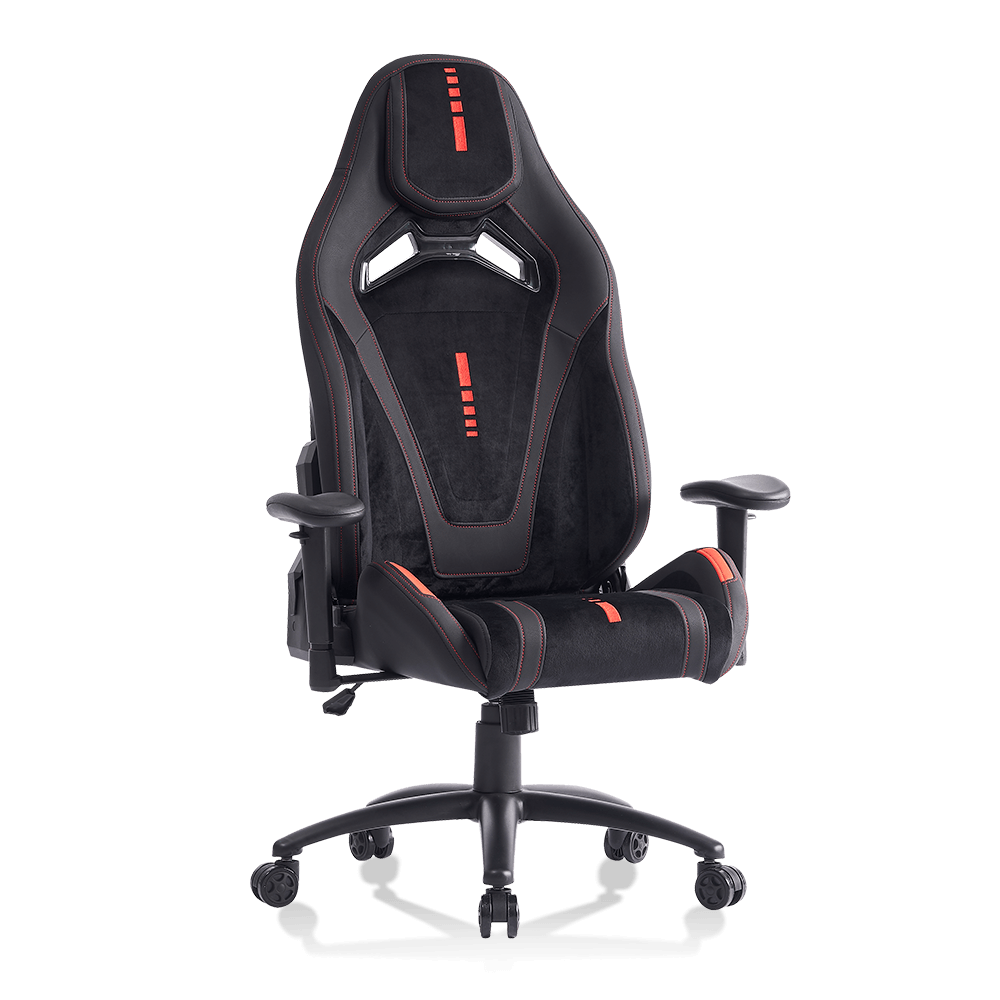 Adjustable Suede Gaming Chair with Steel Frame and 2D ArmrestsThis model pairs suede upholstery with a reinforced steel frame and high-density foam, matching the durability concerns discussed here. Its adjustable 2D armrests and 360-degree swivel suit prolonged commercial use, making it worth comparing with other materials.View Product →
Structural longevity is shared between both cover types: the frame and foam carry the user's weight for thousands of hours. A reinforced steel frame, a certified gas lift, and high-density foam will outlast any cover material. For leather models, resistance to peeling depends on the grade of the synthetic coating. Higher-grade PU with a matte finish and a protective top coat performs markedly better in hot climates, while low-grade materials can fail within a few years. Wholesale buyers should always request a physical sample and inspect the stitching pattern, corner stress points, and material backing before mass production.
Breathability and Heat Build-Up: Which Material Cools Better?
Fabric is the clear winner for airflow. Open fibers let heat and moisture escape, and a mesh backrest creates a ventilated channel along the spine, reducing sweat during intense gaming sessions. Linen and polyester blends also absorb less heat than synthetic leather when a room is warm.
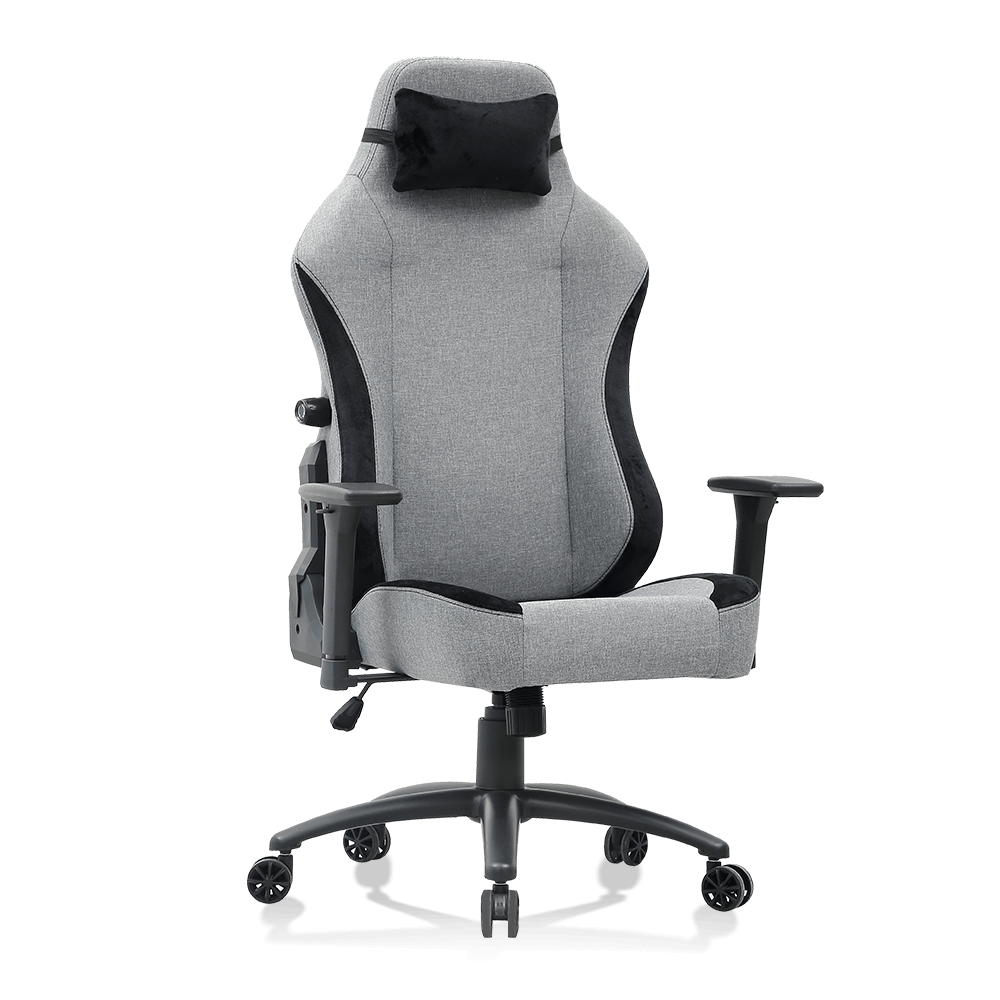 Gaming Chair with Adjustable Lumbar Support and 4D ArmrestsFollowing the discussion on breathability, this chair uses mould foam and offers adjustable lumbar support plus 4D armrests. Its velvet neck pillow and larger metal base add comfort and stability, appealing for buyers prioritizing ergonomic customization over ventilation.View Product →
Leather gaming chairs are naturally less breathable because the surface layer is non-porous. Without ventilation, body heat accumulates on the back and seat, which becomes uncomfortable after two or three hours. However, engineering changes that outcome. Some leather chairs include breathable panels, perforated zones, or hybrid backrests that combine a leather seat with a mesh or fabric back. These hybrids are popular in commercial lines because they keep the premium look while improving airflow.
 Breathable Mesh Gaming Chair with Frosted Leather AccentsAs the passage highlights breathability for warm climates, this chair combines mesh fabric with frosted leather surfaces to improve airflow and reduce stuffiness. Its reclining and swivel functions make it a practical choice for long sessions or venues prone to heat buildup.View Product →
For brands targeting warm climates or venues with long play sessions, a breathable hybrid or a fabric model will reduce comfort complaints and product returns.
Maintenance, Cleaning, and Hygiene in Commercial Settings
Cleaning protocols vary by venue. Esports arenas and showrooms favor leather covers because staff can wipe them down quickly with a mild cleaner, and the surface does not retain liquids. Fabric chairs need vacuuming and periodic deep cleaning; spills that are not treated immediately can leave permanent marks.
- Leather: daily sanitizing with mild cleaner, no absorption, fast turnaround between users
- Fabric: regular vacuuming, spot treatment, occasional professional wash
- Mesh: easy airflow, but dust accumulates in the weave and needs compressed-air cleaning
Consider the expected product lifespan of the venue. If chairs will be shared by many users and cleaned constantly, leather reduces operating cost. If each seat is assigned to a single user at a desk, fabric delivers better comfort and acceptable maintenance effort.
Frame, Foam, and Safety: What Determines Real-World Strength
The cover material is only one layer of a chair. For commercial orders, verify the frame material, gas lift class, base diameter, and certified load capacity. A chair rated for 120 kg will last longer in daily operation than the same model rated for 90 kg, regardless of whether the cover is leather or fabric. Armrest mechanisms and tilt lock functions should also be tested for repeated cycles.
A high-quality frame with a moderate cover grade outperforms a premium cover mounted on a weak frame. Evaluate the whole build, not just the surface.
Sourcing Advice for Commercial Brands
When buying gaming chairs in bulk, material grade and build consistency determine your return rate. Ask suppliers for material swatches, stitching samples, and load-test reports. Confirm the quality control process and the tolerance for defects before the production run starts. A manufacturer that inspects every unit reduces the risk of receiving an inconsistent container.
Our factory operates in-house quality control across the entire manufacturing process, which is critical when a small defect is multiplied across hundreds of chairs. If you plan to differentiate your catalog, look for a partner that can adapt materials and colors. We support customized designs with your branding, including logo embroidery, custom color combos, and selected material grades.
Recommendation Matrix: Matching Material to Your Market
There is no universal winner. The table below summarizes the best fit for common commercial scenarios.
| Scenario | Recommended Material | Key Reason |
|---|---|---|
| Esports venues and gaming cafes | Fabric or mesh | Better airflow for long sessions |
| Executive and showroom displays | Leather | Premium look and easy cleaning |
| Shared hot-desking offices | Leather | Hygienic wipe-down between users |
| Entry-level retail lines | Fabric | Lower cost and softer comfort story |
Frequently Asked Questions
Q1: Which lasts longer, leather or fabric gaming chairs?
With the same frame and foam grade, leather usually resists abrasion better, but synthetic leather can peel around seams and edges after two to four years. Fabric fades and pills but does not peel. The longer-lasting option depends on the grade of the synthetic coating and the stitching quality, not just the material name.
Q2: Are fabric gaming chairs more breathable than leather ones?
Yes. Woven fibers and mesh panels allow heat and moisture to escape, while most synthetic leather surfaces trap body heat. Hybrid chairs with a leather seat and a mesh or fabric back give a balanced compromise.
Q3: Do leather gaming chairs peel over time?
Some do. Low-grade PU leather loses its top coating after repeated flexing and moisture exposure. High-grade materials with protective top coats last much longer. In humid export markets, material grade is one of the most important specifications to confirm.
Q4: Can commercial buyers order both materials from the same factory?
Yes. Many suppliers, including Anji Xuanlong Furniture, produce leather, fabric, and mesh versions of the same platform. Confirming lead times, minimum order quantities, and material certificates early keeps your product launch on schedule.
No single material wins every category. Leather gaming chairs deliver premium aesthetics, wipe-clean surfaces, and strong abrasion resistance. Fabric gaming chairs offer better breathability, a softer touch, and practical lumbar support for long sessions. For commercial brands, the right answer is driven by your target market, climate, and usage pattern. Working with a manufacturer that can supply both materials and customize either version to your brand reduces risk and keeps your catalog flexible.