


 English
 Español
An office chair that looks refined on the first day is easy to find. A reclinable leather office chair with footrest that still reclines smoothly after a year of constant leaning, pulling, and footrest flipping is far harder to source. For furniture distributors, procurement teams, and office operators, the difference between a chair that survives daily commercial use and one that begins to wobble after a few months is decided long before the upholstery is cut. It is decided inside the mechanism.
This guide explains what determines mechanism durability in reclining leather office seating, the components most likely to fail under heavy use, and the questions a commercial buyer should ask before placing a volume order.
What "Commercial Use" Does to a Reclining Mechanism
A residential user may adjust a chair's recline angle and footrest only a few times a day. In a shared office, meeting room, or hotel lounge, the same chair can be tilted, leaned back, and its footrest flipped out dozens of times every day, often by different users with different weights and habits. Over two or three years, those actions add up to tens of thousands of compression and extension cycles on the recline pivot, the footrest linkage, and the gas lift.
Cycle life is the core measure of durability. A mechanism can feel solid when it is new, but commercial-grade endurance is proven by repeated motion, not by static appearance. The table below summarizes the components that feel the most stress in a reclinable leather chair with footrest and what a buyer should verify for each one.
| Component | Main Stress | What a Durability-Focused Buyer Should Check |
|---|---|---|
| Recline backrest pivot | Repeated leaning beyond 100 degrees | Steel bracket thickness, welded reinforcement, rated cycle count |
| Sync tilt mechanism | Daily rocking and tension changes | Spring quality, stamped part thickness, lubrication seals |
| Footrest linkage | Flip-out and retraction cycles | Hinge rivet diameter, slide rail material, end-stop catch |
| Gas lift | Height changes under load | Class rating, seal durability, piston surface hardness |
| Base and casters | Rolling over carpet and hard floors | Load rating, nylon and rubber content, bearing design |
Materials Decide Whether the Mechanism Stays Tight
A solid recline mechanism is only as strong as the structure around it. On a reclinable leather office chair with footrest, the frame carries the entire load of the reclining action. Commercial-grade chairs normally rely on a reinforced metal backrest frame and a sturdy plywood or steel seat base. Thin stampings and lightweight brackets can keep the price low, but they are also the first places to develop play, creaking, and loose joints in a demanding work environment.
Upholstery contributes to long-term performance as well. High-quality PU leather with a tight woven backing resists abrasion and cracking better than thin surface films on a loose fabric support. Foam density determines whether the seat still feels supportive after repeated compression. Double stitching at stress points delays seam failure along the armrests and backrest edges. For an office setting, a model such as the XL3338 reclinable office chair with its linen-look leather upholstery and recline function shows how a manufacturer balances comfort, style, and cleanability in one unit.
 SHINERUN Linkage Armrest Executive Office Chair with FootrestThis synthetic leather office chair offers a 90°-135° back tilt and a built-in footrest, with a padded headrest and cushioned armrests for prolonged desk comfort.View Product →
Load capacity is part of the same equation. A mechanism that feels smooth under a light user may rattle under a heavier one, so high-frequency commercial seating needs a wider safety margin. Heavy-duty construction is not an optional extra; it is a prerequisite for daily office use. A chair rated to 400 lb, such as the XL3386 heavy-duty model, delivers more consistent recline behavior, stronger armrests, and a plated surface that resists scratches during years of service.
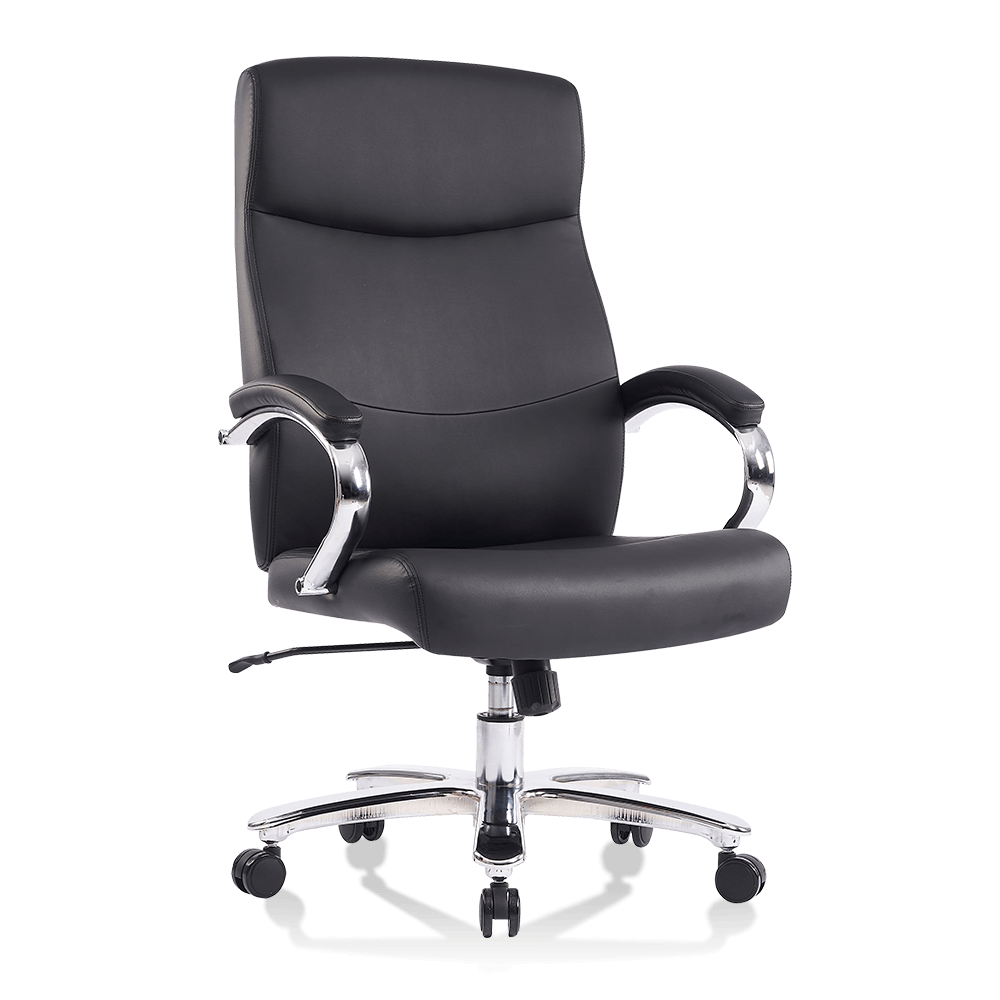 Big and Tall Heavy-Duty Executive Office Chair Rated 400 lbsEngineered for larger users, this high-back leather chair supports up to 400 lb with an oversized seat, metal base, and recline/rock system up to 120°.View Product →
Mechanism and Footrest Designs That Age Well
Different recline designs bring different durability profiles. A one-position locking recline is simple and reliable, while a continuous recline with gas-piston support feels more premium and lets the user settle at any angle, but it places greater demands on seals and gas cartridges. For a commercial environment, the trade-off should be made with maintenance in mind: fewer moving parts usually means fewer callbacks.
Footrest layouts also differ. A flip-up footrest folds beneath the seat and is quick to store; a sliding footrest extends from the front edge of the chair and provides a longer support surface. The critical detail is not the visual style but the mechanism hidden underneath. Hinges need riveted joints rather than fasteners that shear under repeated use. Slide rails need end stops to prevent users from over-extending the footrest, and the locking catch should be rated for at least 50,000 cycles.
A practical example is the XL3347 reclining swivel office chair with footrest. Its synchronized recline carries the user through a smooth motion range, while the integrated footrest gives long-hours workers a place to rest their legs without putting extra force on the backrest pivot.
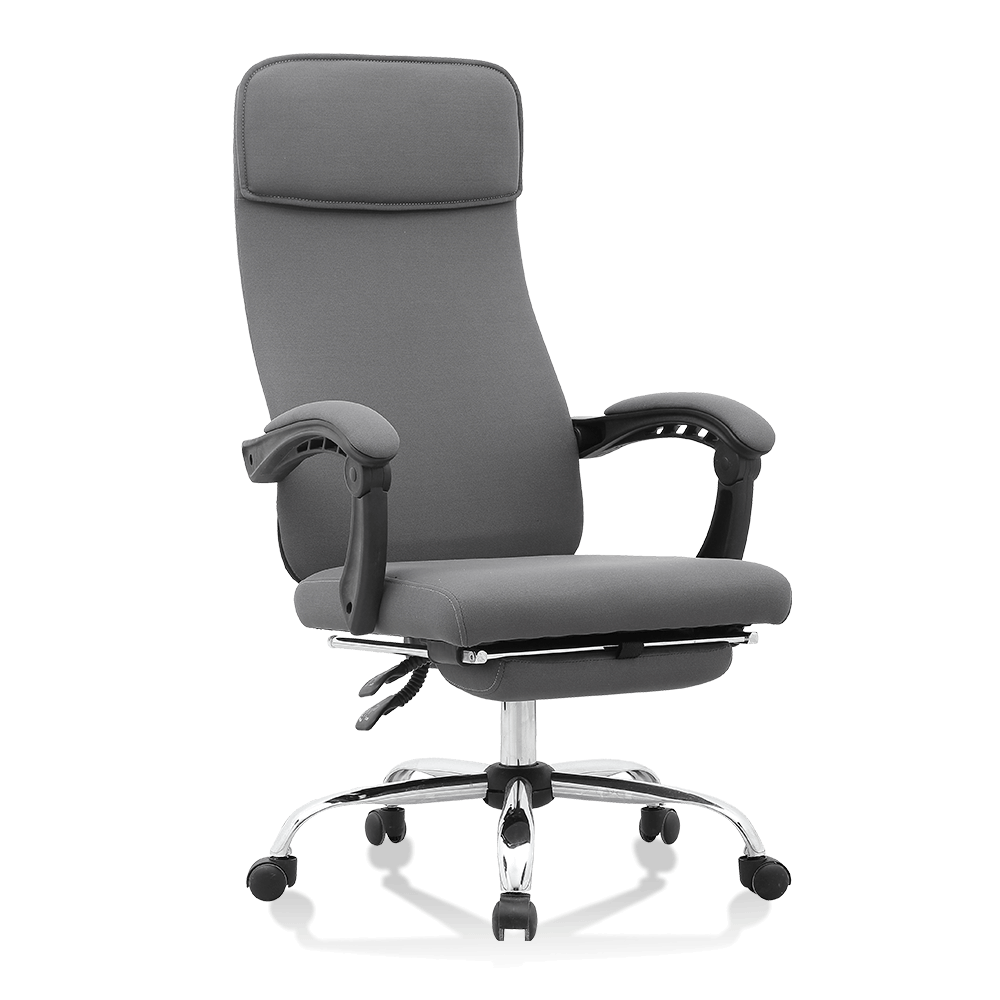 Wholesale High-Back Manager Chair with Footrest and 155° ReclineFeaturing an iron frame, wood construction, and cutting foam cushioning, this executive chair reclines up to 155 degrees and includes resting feet for extended relaxation.View Product →
Four Questions to Ask Before You Order
Before you commit to a container quantity, verify the claims that matter most for daily commercial use. The following checklist covers the weak points of reclinable leather chairs with footrests.
- Can the supplier provide a recline cycle test report? Look for at least 100,000 cycles on the backrest mechanism and 50,000 cycles on the footrest linkage.
- Which components are covered by the warranty? Mechanisms, gas lifts, and casters fail before leather, and a realistic warranty should reflect actual failure rates.
- Is the gas lift class matched to the daily load? Class 3 and Class 4 gas lifts are the common choice for high-frequency commercial seating.
- Does the factory control the mechanism source? A manufacturer with stable material procurement and incoming inspection will deliver more consistent batches.
Keep in mind that the mechanism you test on a sample unit is identical to the mechanism you ship in volume only when the supplier has disciplined sourcing and quality inspection. Check factory processes, not just product photos.
Relying on a Factory That Understands Daily-Use Seating
A chair is the result of tooling, material selection, and inspection discipline. When you work with a manufacturer, you are buying its production process as much as its product line. A factory with dedicated quality control staff is far more likely to catch a weak batch of footrest hinges before it reaches a shipping container. Reviewing the factory's production and process control capabilities gives you direct insight into how consistently it can deliver durable reclining chairs.
Customization matters in the same way. If you are sourcing a reclinable leather chair with footrest for a specific contract - a hotel lounge, a training center, or an executive floor - you may need changes in backrest height, cushion density, leather color, or recline range. A factory with an open customization route can protect your durability requirements while adapting the chair to your order specifications.
FAQ
Q1: How long should a reclinable leather office chair with footrest last under daily commercial use?
A well-built model with a commercial-grade mechanism should provide 3 to 5 years of active service in a multi-user environment. The recline pivot and footrest linkage are the limiting components, so verify their rated cycles and the warranty terms before ordering.
Q2: Do footrests weaken the chair's durability?
Not when the footrest has its own hinge and load path. A properly engineered sliding or flip-up footrest is tied into the frame, so it does not compromise the recline mechanism. Weak rivets and thin slide rails are the more common causes of failure.
Q3: What is the most important durability factor in this type of chair?
The backrest recline pivot and the footrest locking catch. Both see the most stress and the most wear in daily use. Ask your supplier for documented cycle test results for these two areas.
Q4: Is PU leather durable enough for commercial office use?
High-density PU leather with a tight woven backing is a standard choice for commercial seating because it resists abrasion and wipes clean easily. Confirm the face film and backing layer are matched, and ask for the abrasion test result.
Choosing a reclinable leather office chair with footrest should never stop at the first impression of the seat. It is about the mechanism beneath the leather, the quality of the frame and upholstery, and the discipline of the factory that puts all the parts together. For buyers who expect a long service life and fewer end-user complaints, those details matter more than any single feature. A tested recline unit, a well-built footrest, and a manufacturer that can prove both are the safest foundation for any commercial order.